What Is EGCG? The "Polyphenol King" of Green Tea
EGCG (Epigallocatechin Gallate) is the most abundant catechin in green tea (Camellia sinensis), accounting for the majority of its polyphenolic content. As a potent bioactive compound, it has attracted global research interest, with over 5,000 peer-reviewed studies exploring its mechanisms and applications.
Recent research reveals that EGCG operates through a multi-targeted network—regulating appetite, inhibiting fat cell formation, promoting fatty acid oxidation, and enhancing thermogenesis. Its well-established antioxidant and anti-inflammatory properties form the foundation for its therapeutic potential across diverse health conditions.
The Bioavailability Challenge: The "High Activity, Low Absorption" Paradox
Despite its impressive therapeutic potential, EGCG has long faced a critical limitation in product development: low oral bioavailability. Pure EGCG, when ingested, is poorly absorbed, extensively metabolized, and rapidly eliminated—with bioavailability estimates ranging from 1% to 5% for unformulated catechins.
The compound's instability and polarity mean that, despite its potent bioactivity in laboratory settings, it struggles to reach effective concentrations in target tissues when consumed orally. This has historically constrained its clinical applications and commercial potential.
How Jinrui Biotech's Liposome Technology Solves EGCG Bioavailability Challenge
Ordinary EGCG suffers from extremely low oral bioavailability (1%–5%), primarily due to poor stability, rapid degradation, and difficulty penetrating biological membranes. Liposomes, as biomimetic drug delivery carriers, encapsulate EGCG molecules within phospholipid bilayers, offering several key advantages that directly address these limitations.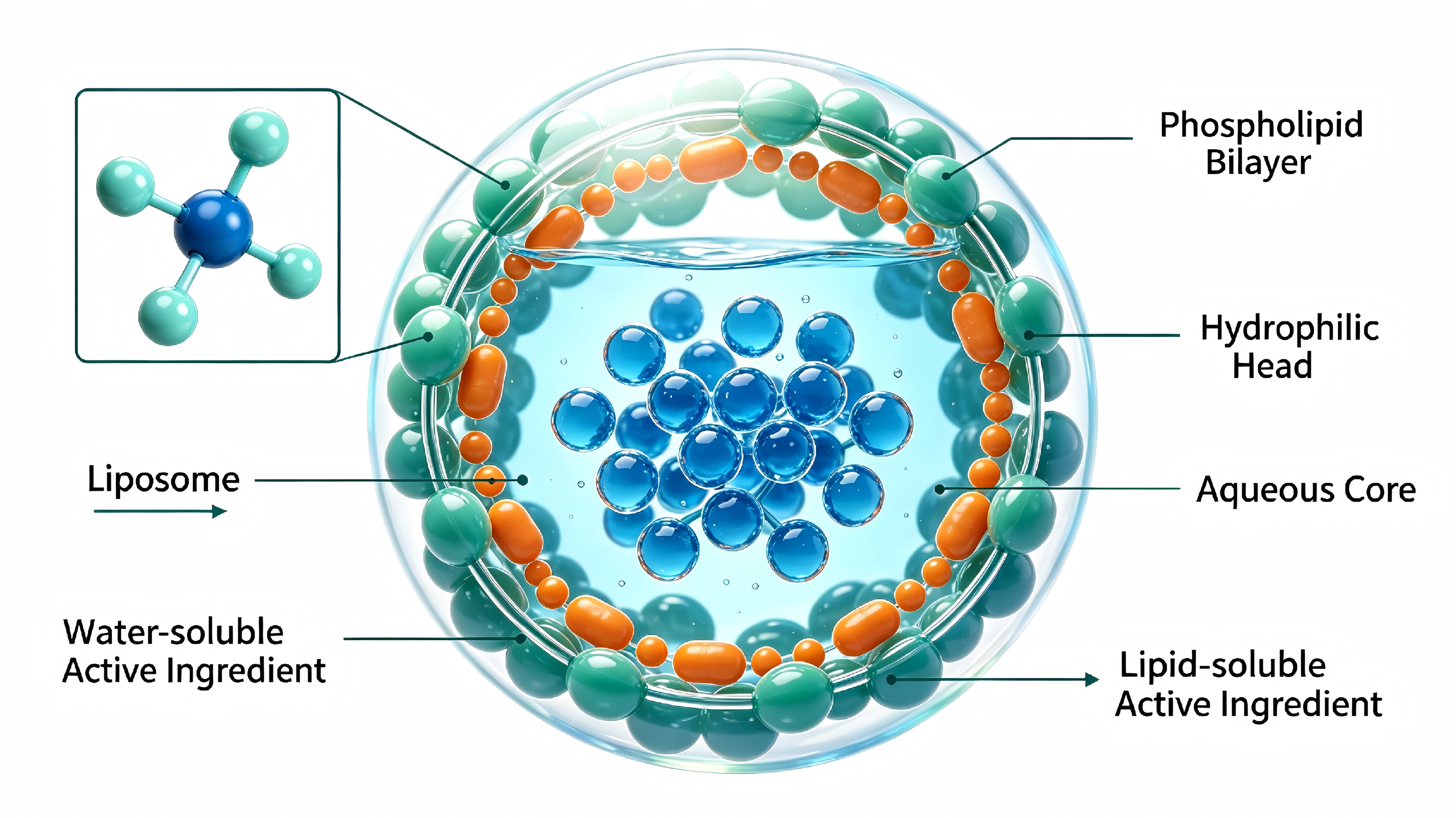
1. Enhanced Stability and Controlled Release
The liposome's shell structure effectively isolates EGCG from environmental stressors such as light, oxygen, and pH fluctuations, significantly delaying oxidative degradation. More importantly, through advanced structural modifications—such as developing liposomes—sustained release of EGCG can be achieved, substantially enhancing its antioxidant activity at the cellular level.
How it works: The phospholipid bilayer acts as a protective barrier, mimicking natural cell membranes. This not only prolongs the compound's halflife in circulation but also ensures a steady, prolonged release profile, maximizing therapeutic efficacy over time.
Why it matters: Higher encapsulation efficiency translates directly to greater payload per dose, reducing the required intake while improving consistency and predictability of therapeutic outcomes.
3. Enhanced Cellular Uptake and Targeted DeliveryResult: In preclinical models, EGCG loaded liposomes achieved brain concentrations 2.5 fold higher than free EGCG, with oral bioavailability increased by more than 2 fold, demonstrating the transformative potential of this delivery platform.

